
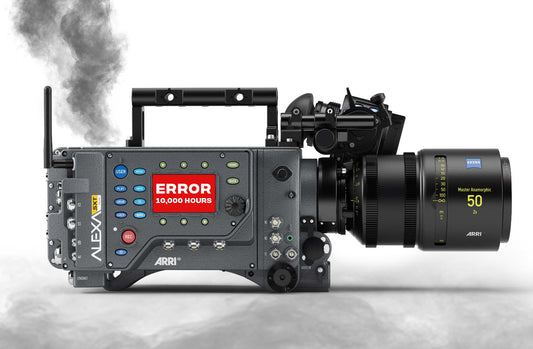
As a camera rental house operating in both Las Vegas and Los Angeles, we've accumulated years of data on cinema camera performance and longevity. This analysis examines the real-world lifespan of ARRI and RED cinema cameras based on our rental fleet's performance data.
Methodology
Our analysis covers cameras that have been in active rental service from 2018 to present. We tracked sensor hours, mechanical issues, service intervals, and overall performance degradation. The data represents over 50,000 rental days across both ARRI and RED platforms.
ARRI Camera Lifespan
ARRI Alexa Classic
Average Active Service Life: 8-10 years
Sensor Hours Before Service: 10,000+ hours
Common Issues: Fan motor replacement around 5,000 hours, viewfinder issues
The Alexa Classic has proven remarkably durable. Our oldest units, purchased in 2012, are still in active service with minimal issues. ARRI's build quality and serviceability have made these cameras true workhorses.
ARRI Alexa Mini
Average Active Service Life: 7-9 years (still in service)
Sensor Hours Before Service: 8,000+ hours
Common Issues: SDI connector wear, occasional sensor cleaning
The Alexa Mini's compact design hasn't compromised its durability. These cameras handle the rigors of gimbal and Steadicam work exceptionally well.
ARRI Alexa Mini LF
Average Active Service Life: 4+ years (ongoing)
Sensor Hours Before Service: 6,000+ hours (no major issues yet)
Common Issues: Minimal - still in early lifecycle
RED Camera Lifespan
RED DSMC2 Platform (Helium, Gemini, Monstro)
Average Active Service Life: 5-7 years
Sensor Hours Before Service: 5,000-7,000 hours
Common Issues: Fan issues, media bay connector wear, occasional sensor anomalies
RED's DSMC2 cameras offer excellent image quality but require more frequent servicing than ARRI counterparts. The modular design, while flexible, introduces more potential points of failure.
RED Komodo
Average Active Service Life: 3+ years (ongoing)
Sensor Hours Before Service: 3,000+ hours (still accumulating data)
Common Issues: Minimal - robust design proving reliable
The Komodo's sealed body and simplified design appear to address many durability concerns from previous RED models.
RED V-RAPTOR
Average Active Service Life: 2+ years (ongoing)
Sensor Hours Before Service: 2,500+ hours (limited data)
Common Issues: Heat management in extreme conditions
Cost of Ownership Comparison
| Factor | ARRI | RED |
|---|---|---|
| Initial Cost | Higher | Lower |
| Service Frequency | Every 2-3 years | Annually |
| Avg Service Cost | $800-1,500 | $500-1,200 |
| Resale Value | Excellent | Good |
| Expected Lifespan | 8-10 years | 5-7 years |
Key Findings
- ARRI cameras consistently outlast RED cameras in rental fleet environments by 2-3 years on average.
- RED's modular design allows for sensor upgrades, potentially extending effective lifespan.
- Environmental factors significantly impact both brands - desert shooting (Las Vegas) accelerates wear.
- Proper maintenance can extend any camera's life by 30-50%.
Conclusion
Both ARRI and RED produce professional-grade cinema cameras capable of outstanding work. ARRI's build quality and longevity make them ideal for rental fleets and productions prioritizing reliability. RED's more accessible price point and cutting-edge features appeal to productions seeking maximum resolution and flexibility.
For our rental clients, we recommend choosing based on project requirements rather than longevity concerns - both systems will deliver excellent results for any production's duration.