
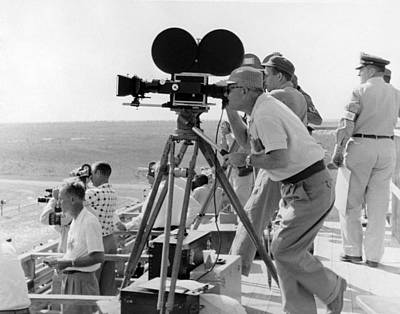
Las Vegas has been a backdrop for some of cinema's most memorable moments. From heist films to comedies, the city's neon-lit streets and casino floors have been captured by some of the finest cameras in film history. Here's a look at iconic Vegas films and the equipment that brought them to life.
The Hangover (2009)
Director: Todd Phillips
Cinematographer: Lawrence Sher
Camera: Panavision Panaflex Millennium XL2
Lenses: Panavision Primo Primes and Zooms
The comedy that launched a franchise was shot entirely on 35mm film. Cinematographer Lawrence Sher chose the Millennium XL2 for its versatility in the tight casino spaces and the chaotic Vegas streets. The film's handheld aesthetic and natural lighting approach gave it a documentary feel that enhanced the "what happened last night?" narrative.
Technical Note: The rooftop scenes and Strip sequences were challenging due to the extreme contrast between neon lights and shadows. Sher often shot wide open at T1.9 to capture available light.
Ocean's Eleven (2001)
Director: Steven Soderbergh
Cinematographer: Steven Soderbergh (as Peter Andrews)
Camera: Panavision Panaflex Platinum
Lenses: Panavision Primo Primes, E-Series Anamorphic
Soderbergh's stylish heist film showcased Vegas at its most glamorous. The director served as his own DP (under a pseudonym) and employed a sophisticated visual language mixing spherical and anamorphic lenses. The Bellagio sequences are particularly notable for their lighting design, capturing the casino's opulence while maintaining shadow detail in the background.
Technical Note: The film used extensive cross-processing techniques in post to achieve its distinctive color palette, giving Vegas a warm, golden glow.
Casino (1995)
Director: Martin Scorsese
Cinematographer: Robert Richardson
Camera: Panavision Panaflex Gold, Arriflex 35 BL4
Lenses: Panavision Primo Primes, Zeiss Super Speeds
Scorsese's epic crime drama required cameras that could handle both intimate dialogue scenes and sweeping casino floor sequences. Richardson's work earned an Academy Award nomination, with the film's innovative use of bird's-eye shots and tracking shots through the casino becoming iconic. The production used multiple camera formats including VistaVision for certain sequences.
Technical Note: The famous tracking shot through the casino's counting room was achieved with a custom-built dolly system and took three days to light properly.
Leaving Las Vegas (1995)
Director: Mike Figgis
Cinematographer: Declan Quinn
Camera: Arriflex 16SR3, Aaton XTR
Lenses: Zeiss Super Speed 16mm Primes
Nicolas Cage's Oscar-winning performance was captured primarily on Super 16mm, an unusual choice for a major studio release. The smaller format cameras allowed for intimate handheld work and quick setups on Vegas streets without permits. The grainy, documentary-like quality enhanced the film's raw emotional intensity.
Technical Note: Much of the film was shot guerrilla-style on real Vegas locations, with the 16mm cameras providing the mobility needed for fast shooting before being asked to leave.
Fear and Loathing in Las Vegas (1998)
Director: Terry Gilliam
Cinematographer: Nicola Pecorini
Camera: Arriflex 535B, Moviecam Compact
Lenses: Zeiss Ultra Primes, specialty wide-angle lenses
Gilliam's psychedelic adaptation of Hunter S. Thompson's novel required creative camera work to visualize drug-induced hallucinations. The production employed extreme wide-angle lenses, unusual camera angles, and innovative in-camera effects. The desert sequences outside Vegas were shot during magic hour for maximum visual impact.
Technical Note: Many hallucinatory sequences used practical effects combined with distorted lenses rather than post-production effects, giving them an organic quality.
21 (2008)
Director: Robert Luketic
Cinematographer: Russell Carpenter
Camera: Panavision Genesis
Lenses: Panavision Primo Primes
This card-counting drama was one of the earlier major productions to be shot on digital (the Panavision Genesis). The camera's ability to handle the extreme contrast ratios found in casinos - from bright slot machines to dark corners - made it ideal for the Vegas sequences.
Technical Note: The Genesis allowed for real-time color grading on set, helping achieve the film's slick, high-contrast look.
The Cooler (2003)
Director: Wayne Kramer
Cinematographer: Jim Whitaker
Camera: Arriflex 435
Lenses: Zeiss Master Primes
This indie drama, set in a fictional old-school Vegas casino, used deliberate lighting contrasts to emphasize the difference between the cold casino world and warm romantic moments. The production built much of the casino set to have complete control over the lighting environment.
Modern Vegas Productions
Today's Vegas productions increasingly rely on digital cinema cameras like the ARRI Alexa Mini and RED systems. These cameras excel in the challenging mixed-lighting environments of modern casinos, where LED screens, neon signs, and practical lights create complex color temperature situations.
At Klear Optics & Digital, we provide the same caliber of equipment used in major productions. Whether you're shooting a documentary, commercial, or indie film, we have the cameras and lenses to capture Vegas in all its glory.