
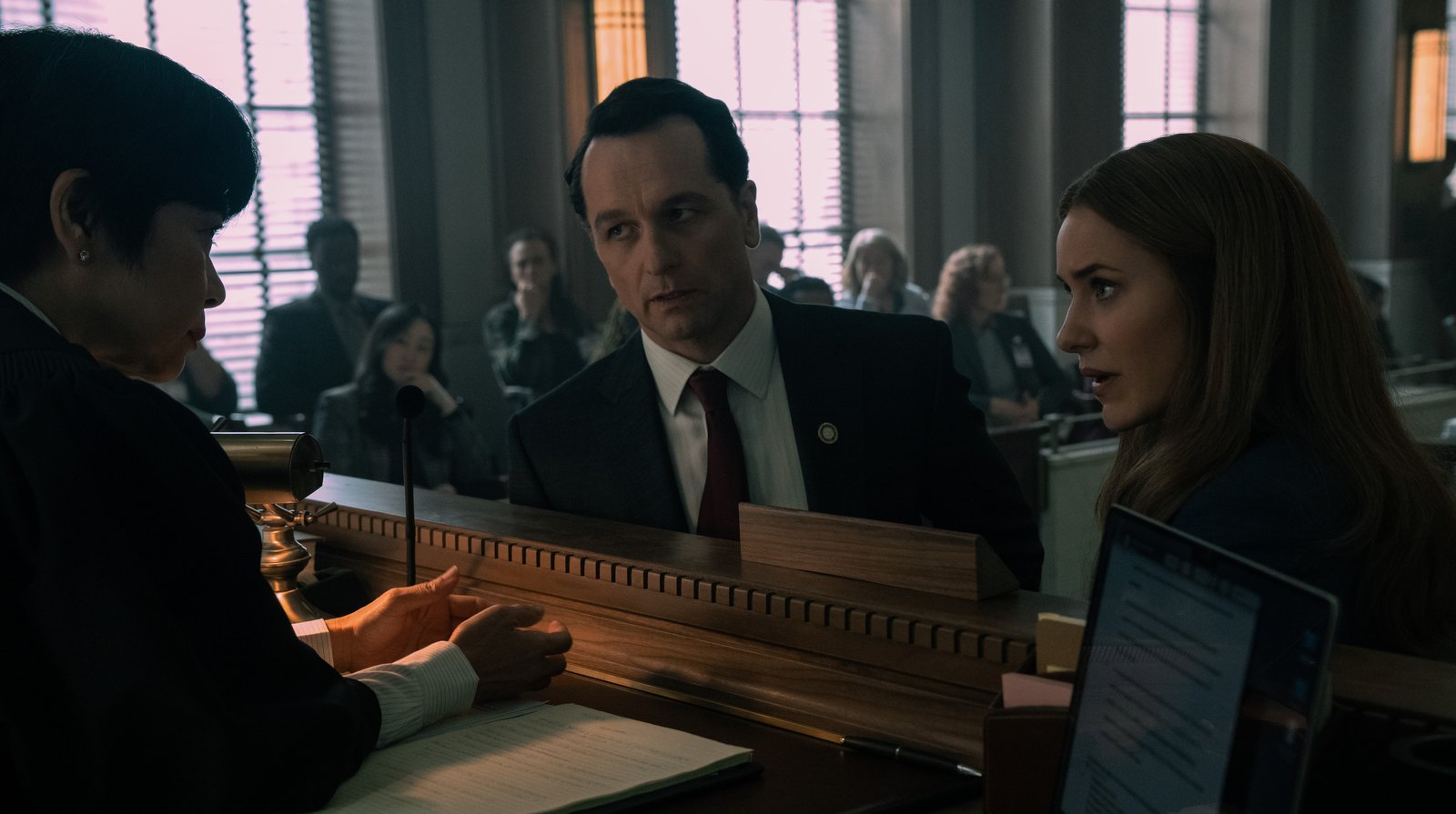
Rachel Brosnahan and Matthew Rhys star in Presumed Innocent season two as a married couple embroiled in a murder case that threatens their careers and marriage. Brosnahan plays defense attorney Lelia Reynolds facing off against her husband, played by Rhys, who is the district attorney prosecuting the same case. The Emmy award-winning duo return for another courtroom clash based on Scott Turow’s novel. Jack Reynor, Lesley-Ann Brandt, and Judith Light join the cast as guest stars. Season two premieres March 19 with weekly releases until April 2.
Rachel Brosnahan Stars as Defense Attorney
Rachel Brosnahan stars as Carla Bergstrom, the defense attorney in 'Presumed Innocent' season two. The show's trailer highlights her intense courtroom drama and complex character development alongside Matthew Rhys. Brosnahan's performance is a central focus of the new season, promising to delve deeper into the legal and ethical challenges faced by those defending the accused.
Jack Reynor, Lesley-Ann Brandt, and Judith Light join the cast as guest stars in this season, adding layers to the narrative with their performances. The ensemble cast will explore intricate storylines that keep viewers engaged from week one through April 2nd, with new episodes dropping weekly. This release strategy allows for a sustained build-up of suspense and character development over time.

Rhys Opposes Wife in Murder Case Trial
Matthew Rhys takes center stage as Tommy Lee Russell, the prosecutor facing off against his wife Carla Bergstrom in the upcoming second season of 'Presumed Innocent'. The first look teaser reveals an intense courtroom drama where personal relationships clash with professional ethics. Rhys's performance is crucial to the narrative, offering a nuanced portrayal of a man torn between duty and loyalty.
The series, based on Scott Turow’s novel, previously adapted for a feature film starring Harrison Ford, brings a fresh perspective to the legal thriller genre. The first season earned Emmy nominations for Jake Gyllenhaal, Ruth Negga, Peter Sarsgaard, and Bill Camp, highlighting the show's strong ensemble cast. With Rhys and Brosnahan at the helm of the second season, viewers can expect a deep exploration of moral dilemmas and human complexities within the judicial system.
Season Two Ensemble Cast Includes Brandt
Lesley-Ann Brandt joins the ensemble cast as a guest star for 'Presumed Innocent' Season Two, bringing her versatility and range to the legal drama. Her character is set to add depth to the complex narrative by interacting with Matthew Rhys's Tommy Lee Russell and Rachel Brosnahan's Carla Bergstrom. On set, Brandt’s performance will challenge the dynamics between the lead characters, influencing their personal and professional relationships.
Jack Reynor and Judith Light also bring new dimensions to the storyline through their guest appearances. Their roles are integral in expanding the scope of the series beyond its central conflict, providing viewers with a broader understanding of the ethical challenges faced by those within the legal system.
Implications for Camera and Lens Rental
The upcoming season of "Presumed Innocent" will require extensive use of close-up shots and intimate scenes due to the heightened emotional stakes between Rachel Brosnahan and Matthew Rhys's characters. This demands high-resolution lenses capable of sharp focus at very short distances for detailed facial expressions, particularly during courtroom confrontations. Lenses with a shallow depth of field are crucial to isolate subjects from their backgrounds in crowded settings like courtrooms or offices.
Given the dark and moody atmosphere expected in legal dramas, rental houses should have access to high-contrast lenses that can handle low-light conditions effectively without compromising image quality. The series' emphasis on moral dilemmas and ethical challenges will benefit from cinematography that captures subtle nuances through careful lighting setups and strategic camera placements. This means DPs might seek out versatile cameras with a wide dynamic range, allowing for better control over exposure in scenes that transition between bright interiors and dimly lit hallways or interrogation rooms.